

On Good Authority
12 August 2026
Hi there,
Welcome to a new edition of On Good Authority. We look at Europe’s summer of heatwaves and fire, new global energy technology market data, and China’s new renewable energy targets.
Our feature focuses on people’s attitudes to renewable energy, including the progress being made, and the challenges holding the transition back.
For further news and updates please follow us on Facebook, Instagram and LinkedIn.
Authority news
Appin Mine visit
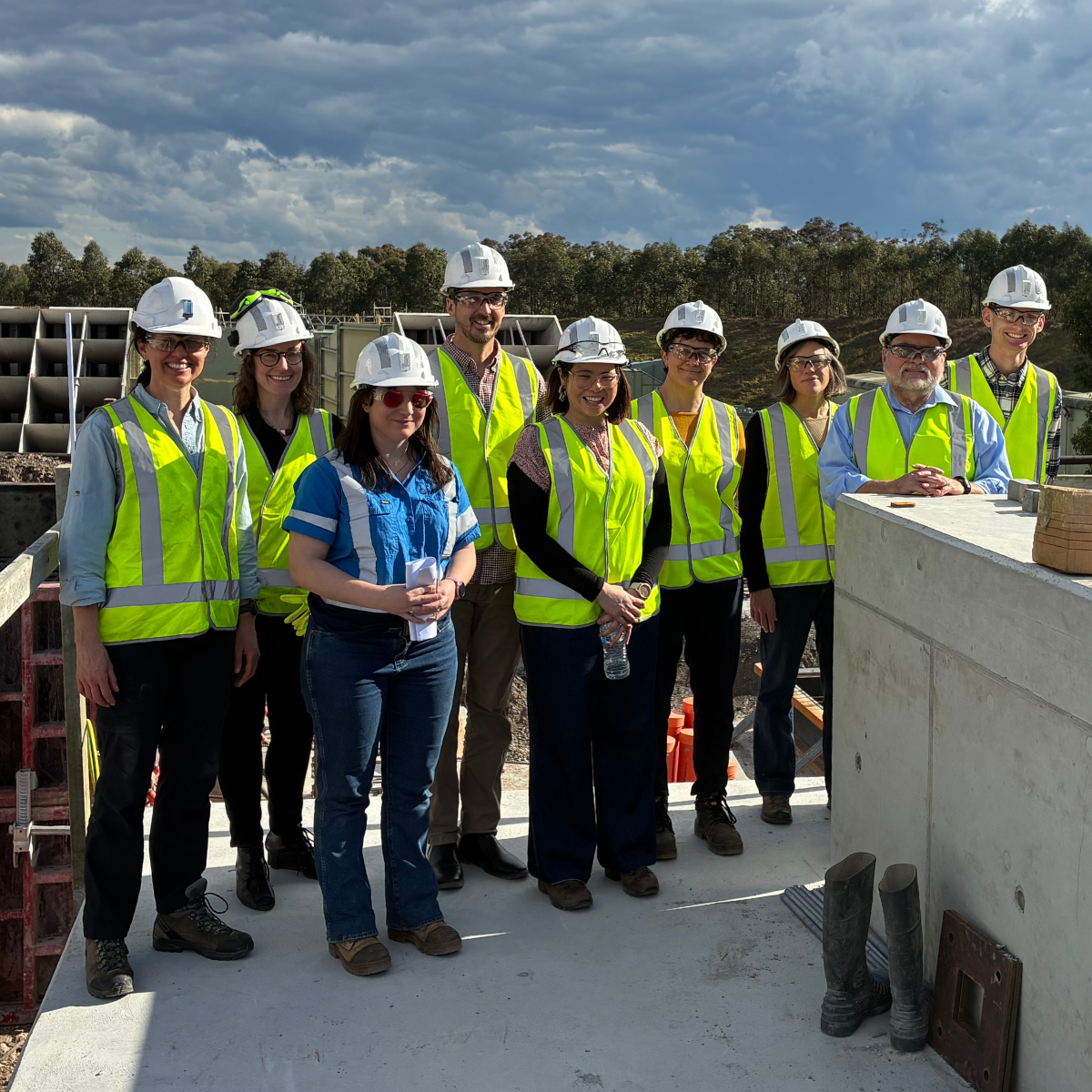
Some of our members and Authority staff recently visited a coal mine as part of efforts to better understand the challenges and opportunities for reducing emissions in the mining sector. The Appin Mine, just south of Campbelltown NSW, is one of Australia's largest underground coal operations. We learnt about the mine's operations and emissions reduction activities, including efforts to lower fugitive methane emissions. These visits and conversations help inform our independent, evidence-based advice to government.
Thanks for having your say
Thank you to everyone who made a submission to our recent consultations on fossil methane and our Annual Progress Advice (including the Safeguard Mechanism). We received more than 140 submissions. Your feedback will be used to inform our advice to the minister by the end of the year.
The Authority has published its second listening report of the year based on consultation and engagement activities for our Evidence Platform project. We received 24 submissions during the public consultation process and undertook more than 50 consultations.
Further details about our public consultations are available in the Consultation Hub on our website.
Fast fact
47%
How much average National Electricity Market wholesale electricity prices fell by year-on-year.
Down $66 per MWh from Q2 2025.
News in brief
Europe’s wildfires rage on
Europe is seeing one of its worst wildfire seasons. To date, more than 520,000 hectares of land has already been burnt. This is more than the same period in 2025, which was the worst year on record. The fires coincide with prolonged heatwaves dominating parts of Great Britain, France, Spain and the Balkans. According to analysis by the Financial Times, the fires and heatwaves have already cost more than EUR 3 billion. Costs include property and crop damage as well disruption to tourism during one of the continent’s most popular periods.
Energy technology market tops USD 1.1 trillion
The global market for clean energy technologies exceeded USD 1.1 trillion in 2025, highlighting the rapid growth of solar, wind, batteries, electric vehicles, and heat pumps. The market has grown by around 20% each year over the past decade. The International Energy Agency says expanding investment and production across more countries could strengthen supply chains, despite rising competition and trade tensions.
China sets ambitious new clean energy target
China has raised its renewable energy ambitions, setting a target of 3,500 gigawatts (GW) of renewable capacity by 2030, including more than 2,800 GW of wind and solar. The target represents a 50% increase in renewable capacity and would support a power system where renewables already generated around 38% of electricity in 2025. As the world's largest greenhouse gas emitter, China's clean energy targets have significant implications for global emissions trends and international climate efforts.
Solar support expands for communities and businesses
Schools, hospitals, farms and businesses will soon be able to set up larger solar systems at a lower cost following the expansion of the Small-scale Renewable Energy Scheme. The scheme will expand to include systems of between 100 kilowatt and 1 megawatt from 1 October 2026. This will allow commercial and industrial buildings, schools, hospitals or farms, to install rooftop solar systems to reduce their energy costs and contribute more renewable electricity to the energy system.
The announcement follows advice from the Authority in our 2025 electricity report to expand and extend support for solar systems on commercial, industrial and community buildings, including in rural areas.
New finance for mid-scale renewables
Mid-size renewable energy projects will gain access to new financing through a $100 million Clean Energy Finance Corporation initiative. The funding targets projects that sit between individual rooftop solar and large-scale renewable developments, an area sometimes referred to as the 'missing middle' of the energy transition. Delivered through the Distribution Connected Accelerator Program, the funding could support up to 16 renewable energy and battery projects.
Offshore wind sector advances on 2 fronts
Australia’s first offshore wind auction is still expected to take place in Victoria later this month, according to recent media reports and earlier advice. The auction will open for an initial 2 gigawatts of capacity, enough to power 1.5 million homes. Managed by Offshore Wind Energy Victoria, the auction follows the 2022 establishment of 6 priority areas for offshore wind in New South Wales, Victoria, Tasmania and Western Australia.
In related news, a University of Queensland (UQ) study to reduce the set-up costs for offshore wind projects has passed the testing stage. UQ developed a new design for floating wind turbines which have strong potential for assembly in harsh ocean regions and variable water depth. Global offshore wind is currently dominated by fixed bottom foundations. They are less expensive than floating but are restricted to shallow or transitional waters under 60 metres deep.
Climate Active closes after 16 years
Climate Active, Australia’s voluntary carbon-neutral certification program, will close after 16 years of operation. More than 550 businesses have held Climate Active certifications, which recognised organisations that measured, reduced and offset their emissions. The Government has said stronger climate policies and the introduction of mandatory climate disclosures contributed to the closure. Consultation on transition arrangements remains open until 18 September 2026.
Our feature this week

Familiarity and trust shape support for
clean energy solutions
Recent research shows that familiarity, trusted information and expectations of lower energy costs are the strongest drivers of support for the energy transition.
The latest Clean Energy Solutions Index 2026 adds to growing evidence about how Australians view the technologies and industries that will support the transition. The Index measures support for a range of clean energy solutions, including whether people support them personally, believe their community supports them and would speak positively about them with others.
One of the report's strongest findings is that familiarity matters. Technologies people encounter in everyday life, like rooftop solar, continue to attract high levels of support. Newer and less familiar technologies generally receive lower levels of support, suggesting that familiarity and personal experience play an important role in building confidence.
Cost and energy security also influences public attitudes. Australians showed the strongest support for solutions they believe will lower energy bills and strengthen Australia's energy independence. This suggests that affordability and energy security remain central to public support for the transition.
The Index also found many Australians underestimate both the progress already made and the level of support for clean energy among other Australians. Similar findings can be seen internationally. A recent study published in Nature Climate Change found people often underestimate how much others support climate action whilst often overestimating the extent to which they are already taking action themselves.
Recent research also suggests that clear, trusted information and meaningful community engagement are also important. A 2023 CSIRO survey of more than 6,700 Australians found broad support for the energy transition, while highlighting a strong demand for clearer information about renewable energy projects and their impacts.
These findings align with the Climate Change Authority's 2025 Annual Progress Report, which identified social acceptance as critical to achieving Australia's climate targets. The advice highlighted opportunities to strengthen community engagement, improve communication and increase local participation in decision-making.
As Australia continues its transition to cleaner energy, these findings point to a simple lesson: people are more likely to support change when they understand it and can see benefits to their bottom line and their communities.
What do you think of OGA?
Acknowledgement of Country
The Authority recognises the First Nations people of this land and their ongoing connection to culture and country. We acknowledge First Nations people as the Traditional Owners, Custodians and Lore Keepers of the world's oldest living cultures, and pay our respects to their Elders—past and present.
Follow us on

Unsubscribe
Built with
