


On Good Authority
25 February 2026
Hi there
Welcome to the first edition of OGA for 2026!
As well as our news in brief, this edition we take a closer look at the Climate Science and Modelling Roundtable convened by the Climate Change Authority on 13 February. The event brought together leading climate science agencies, senior policymakers and major climate data users to address growing concerns about the resilience of Australia’s climate intelligence system.
We’re refreshing this newsletter to make it more useful with less noise, but still giving readers the climate news you love. You’ll now receive OGA every fortnight on a Wednesday and back issues will be available on our website. Please email us at [email protected] to let us know what you think of the new OGA.
For further news and updates please follow us on Facebook, Instagram and LinkedIn.
Authority news
Our Chair Matt Kean recently spoke at the Climate Investor Forum about turning climate ambition into an investable opportunity.
Authority Member and Australia’s Chief Scientist also spoke at the Australian Meteorological and Oceanographic Society Conference, urging for stronger climate intelligence, better computing infrastructure and bold communication to protect the nation from rising climate risks.
News in brief
Heat, floods and record-warm seas define Australia’s year
The nation has experienced its fourth warmest year on record, with maximum and minimum temperatures well above average and heatwave conditions happening throughout the year. The Bureau of Meteorology’s Annual Climate Statement 2025 found:
National rainfall was around 8% above average, mainly due to heavy rain and cyclones in the north, while the south stayed generally drier than usual.
Australia’s total surface water storage dropped to 68% of accessible capacity, with the Murray–Darling Basin seeing a bigger fall.
Sea surface temperatures were the warmest on record for the second year in a row.
Antarctic sea ice remained historically low.
For Australia as a whole, the national annual average temperature was 1.23 °C above the 1961–1990 average.
AUD81 million boost for Australia’s largest First Nations-led carbon project
The Clean Energy Finance Corporation and Australian investment firm, River Capital, have committed $81 million in what will become Australia’s largest First Nations-led carbon initiative on the Tiwi Islands. All 8 Tiwi clans will plant 30,000 hectares of native eucalyptus, which is projected to generate up to 5 million nature-based Australian Carbon Credit Units (ACCUs). The project is also expected to create major employment, training and long-term economic opportunities for the Tiwi communities-led carbon initiative.
The Authority is currently reviewing the ACCU Scheme to understand whether it is effectively meeting the needs of a decarbonising economy.
China’s emissions slide, but targets still out of reach
Latest analysis from Carbon Brief shows China’s emissions have been flat or falling for 21 months now, with a 1% drop in the December quarter 2025. China’s carbon intensity is down 12% since 2020, but still short of the country’s 18% target. Most major sectors have been cutting emissions over the last 2 years – cement and other building materials (-7%), transport (-3%) and metals (-3%) – but the chemicals industry jumped 12%. New policies due next month will determine whether China can speed up its progress and reach its target to peak emissions before 2030. China currently releases over one-quarter of total global emissions.
Low‑carbon boom to unlock 375 million jobs
New research from the World Resources Institute shows the transition to a low-carbon economy could create almost 375 million jobs globally over the next decade across energy, construction, manufacturing and agriculture. Adaptation roles may make up 280 million of these jobs, from ecosystem restoration and climate-resilient agriculture and fishery to building retrofits for extreme heat. The Authority’s Sector Pathways Review highlights the need to address workforce shortages as Australia transitions to net zero, reinforcing the importance of skills development and re‑skilling to meet growing demand for climate resilience roles.
Record uptake of home batteries as Australians embrace clean energy shift
Australians are installing home batteries at record levels, according to a Clean Energy Council report. In the second half of 2025, 183,245 battery units were sold after the introduction of the Cheaper Home Batteries scheme. This represents four times as many sales as during the same period in 2024. Total household battery installations have now reached 454,753. Australians also added 2.6 gigawatts of new rooftop solar capacity in 2025, approaching the output of Eraring power station according to the CEC. New South Wales leads in installed capacity while Queensland has the most rooftop solar systems.
Fortescue trials new battery-electric trains
Fortescue has introduced 2 new battery-electric trains into its Pilbara rail fleet, marking a key step in its push to fully decarbonise all operations by 2030. The trains house the world’s largest land-mobile battery and are expected to save one million litres of diesel a year—though this is still a small portion of Fortescue’s overall diesel use. The move comes as BHP also trials battery electric trains, while Rio Tinto has paused its own program, citing battery limitations. Overall, the trials highlight a rapid but uneven shift toward lower emissions rail transport in one of Australia’s highest emitting regions.
UN says the world is in water bankruptcy – here’s what that means
A new United Nations University study warns that the world has entered a state of “water bankruptcy,” with global demand for freshwater now outstripping what natural systems can sustainably provide. Climate change, population growth, pollution and decades of poor water management have resulted in nearly half of the world’s population experiencing severe water scarcity each year. Improvements in water governance, investment in resilient infrastructure and a renewed focus on treating water as a finite resource can help prevent further humanitarian, economic and environmental impacts.
Aerial survey reveals hidden methane pollution
Measurements taken by aircraft in 2023 show that major US oil and gas producing regions may be emitting up to 5 times more methane than companies report to regulators. Researchers found total emissions equivalent to 9 million tonnes a year, with about 90% coming from oil and gas operations rather than other sources like agriculture or landfills. The findings add to growing evidence that emissions of methane, a potent greenhouse gas, are often underreported at oil and gas fields.
The Authority is taking a deep look at opportunities to radically reduce fossil methane emissions in Australia. The project will review the latest developments in technological solutions and measures to leverage research, development and demonstration opportunities in Australia.
New vehicle standards deliver early lift in cleaner cars
The first National Vehicle Efficiency Standard (NVES) results for 2025 show the policy is already shifting the Australian market, with 620,947 new vehicles brought into the fleet in the second half of last year. Of the 59 regulated car brands, around 68% of them beat their emissions targets and generated more than 17 million NVES units. Zero emissions – battery electric or hydrogen fuel-cell – models made up 12% of all covered vehicles, an early sign the standard is shifting the market toward cleaner cars. Each year on 1 January, the amount of tailpipe emissions certain categories of cars can emit across a car brand’s fleet will get lower, reducing their greenhouse gas emissions.
Our feature this week
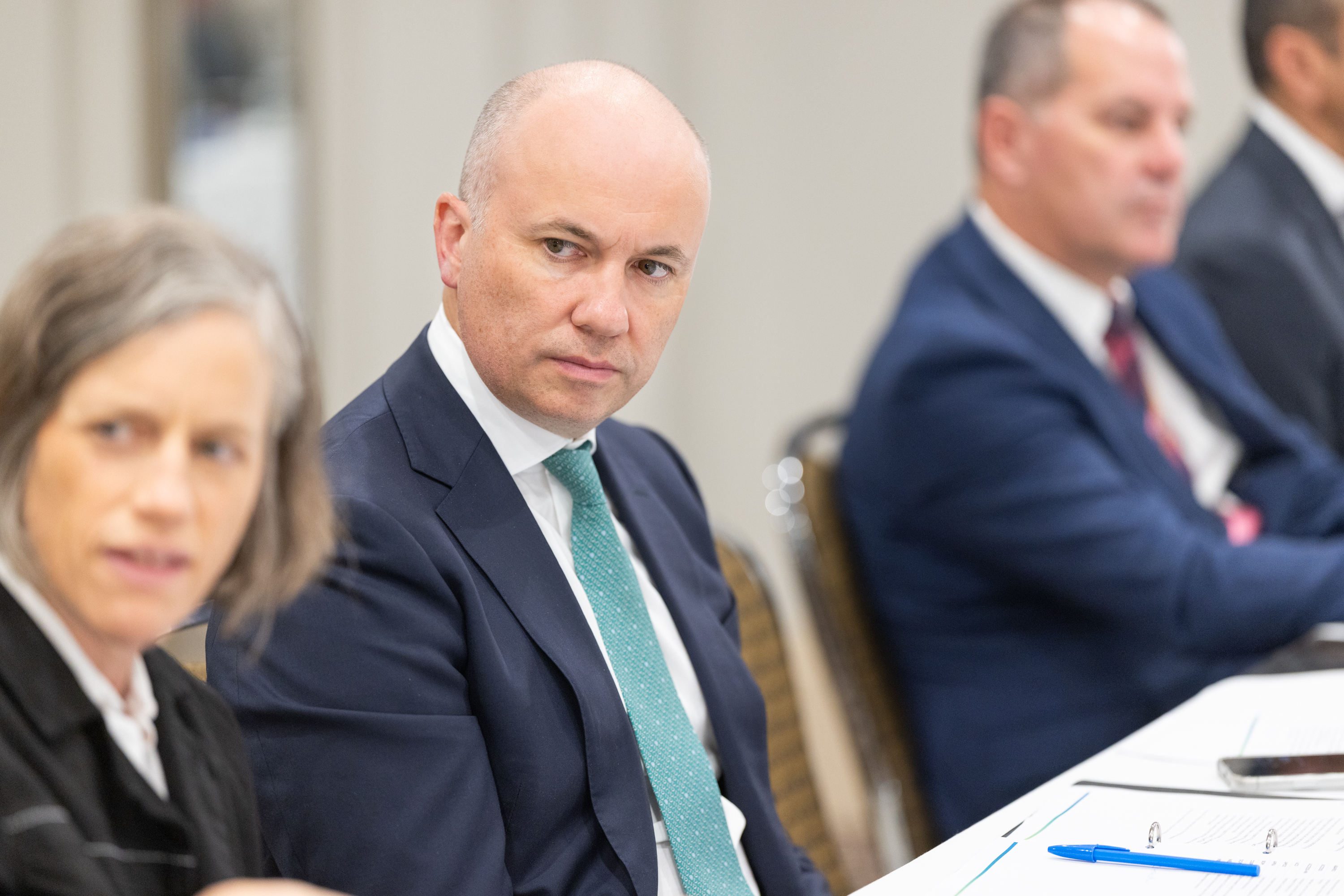
Strengthening Australia’s climate intelligence: Insights from the Authority's roundtable
Australia’s climate science system is at a critical juncture just as climate risks intensify. That was the clear message from the Climate Science and Modelling Roundtable held in Canberra on 13 February. Convened by the Authority’s Chair, the Hon. Matt Kean, the event brought together senior policymakers, climate data users and scientists as well as the Assistant Minister for Climate Change and Energy and Assistant Minister for Emergency Management, the Hon. Josh Wilson MP.
Participants warned that Australia’s climate intelligence system – which spans observations, modelling, data processing and decision support – is essential, but fragile. Responsibilities are spread across agencies, jurisdictions and research institutions, with no single point of national leadership and responsibility. Core capabilities rely on short-term, disaster-linked funding rather than stable, long-term service provision.
Critical enablers, like Australia’s supercomputing infrastructure, are also not fit-for-purpose for our future needs. At the same time, Australia depends on international programs whose futures are uncertain, including key US-supported ocean and atmospheric observing networks.
Strengthening coordination across the climate science–adaptation value chain is critical to ensuring climate information reaches the households, farmers, insurers, emergency services and decision-makers who depend on it most. Participants recognised Australia’s recent National Climate Risk Assessment as a major milestone in the maturity of climate intelligence, but one that also highlighted the scale of the work still needed.
The roundtable also heard compelling economic evidence for action. Climate change is already pushing up insurance costs, with insured losses from extreme weather averaging $4.5 billion annually between 2019 and 2024, 67% higher than the previous 5 years. Disaster recovery funding is placing increasing pressure on the federal budget and slowing productivity. Better climate intelligence, participants agreed, can help governments, businesses and communities prepare for and avoid the most damaging impacts.
Acknowledgement of Country
The Authority recognises the First Nations people of this land and their ongoing connection to culture and country. We acknowledge First Nations people as the Traditional Owners, Custodians and Lore Keepers of the world's oldest living cultures, and pay our respects to their Elders—past and present.
Follow us on

Unsubscribe
Built with
